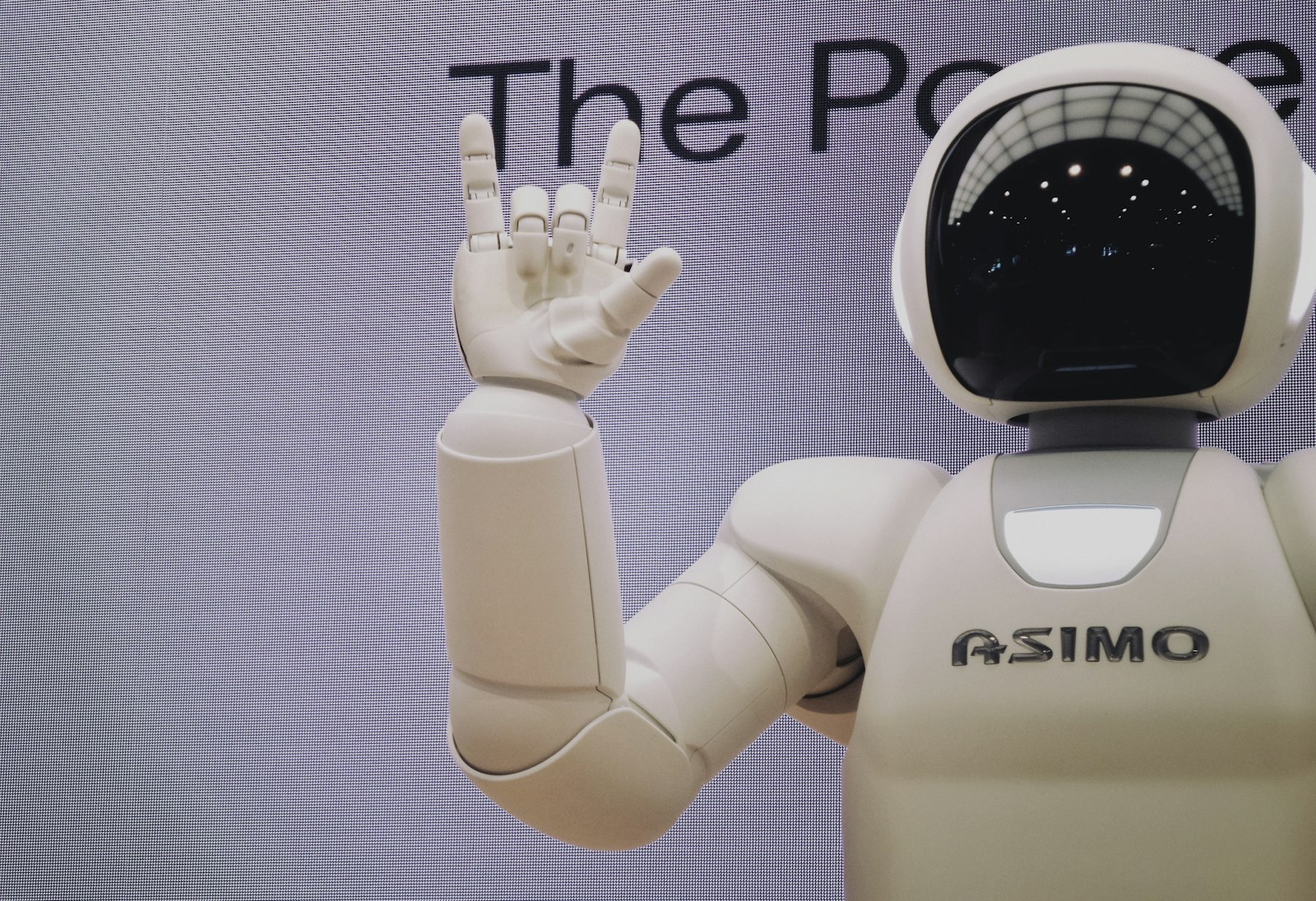
If you work with voice – as an actor, creative director, or indie dev – it probably feels like the ground is shifting under your feet.
In a few clicks, you can now generate a synthetic voice that sounds close to a real performer, complete with breaths and emotional cues. Companies like ElevenLabs and others offer voice cloning from just a handful of audio snippets, and OpenAI has demonstrated “Voice Engine,” which can mimic a voice from a 15-second sample and then speak in multiple languages.OpenAI has even held back broader release of this tech over misuse concerns. That is both impressive and terrifying if your livelihood depends on your voice.
At the same time, the people behind the microphones are pushing back. SAG-AFTRA – the union representing screen and voice actors – has been negotiating AI guardrails into new contracts, including agreements covering video games, sound recordings, and even partnerships with AI voice vendors that require consent, compensation, and limits on synthetic replicas.Their AI resource hub now reads like a crash course in digital doubles.
So where does this leave you in the AI age: Is voice acting about to be eaten by synthetic voices – or is something more complicated happening?
How We Got Here: From Text‑to‑Speech to Tailored Clones
A decade ago, most text‑to‑speech sounded like a GPS having a bad day. Today, you can:
- Clone a voice from short samples.
- Generate new, “original” synthetic voices.
- Convert one person’s performance into another voice entirely.
Tools like ElevenLabs’ platform let users upload a few clean recordings and create a Professional Voice Clone that others can license via a voice library, with usage-based payouts going back to the voice owner.Their documentation explains how voice actors can earn payouts when paid users generate audio with their shared voice models. On the open-source side, techniques like retrieval-based voice conversion (RVC) can take your spoken performance and render it in a different voice while preserving timing and intonation.RVC is explicitly designed to keep the original expressiveness while swapping the vocal “skin”.
Meanwhile, general-purpose AI models like ChatGPT, Claude, and Gemini are increasingly integrated with speech front-ends. It is becoming trivial to bolt a synthetic voice onto an AI assistant or game NPC.
The result: synthetic voices are no longer a novelty; they are part of the default toolkit.
Why Studios Are Tempted by Synthetic Voices
From a producer’s point of view, synthetic voices solve some very real problems:
- Speed and iteration: Need placeholder dialogue for a prototype or temp VO for internal playtests? AI text-to-speech can generate thousands of lines overnight.
- Cost efficiency at scale: For mobile games, e-learning, or ads with razor-thin margins, paying for dozens of human sessions can be hard to justify.
- Global reach: AI voices can speak multiple languages and accents with consistent tone, which is attractive for localization-heavy projects.
- Always-on availability: A synthetic voice never gets sick, never ages, and is always one click away.
You are already seeing this in practice. Embark Studios originally used AI-generated voices heavily in its shooter “Arc Raiders” and its earlier game “The Finals” to help small teams quickly build rich worlds. After backlash, the studio’s CEO publicly acknowledged that “a real professional actor is better than AI” and said they are re-recording a lot of AI dialogue with human performers.He described AI voices as a tool, not a destination.
In other words: many studios are drawn to AI voices for prototyping and scale, but they are discovering the limits when it comes to emotional impact and audience trust.
What Humans Still Do Better (And Probably Will for a While)
Despite the hype, human voice actors have durable advantages that are hard to replicate with current tech:
-
Nuanced emotional arcs
AI is surprisingly good at “local” emotion – a sad line here, an excited shout there. But building a performance that slowly evolves across hours of dialogue, with subtle callbacks and shifting subtext, still requires a human actor making conscious choices. -
Improvisation and collaboration
Great VO often emerges from actors working with directors, writers, and other cast members in the booth. Ad-libs, timing tweaks, and reactions to other performances shape the final result. A static synthetic voice, even fine-tuned, does not yet “riff” with you in the same way. -
Trust and authenticity
Players and listeners increasingly care whether a performance is “real.” When fans of Baldur’s Gate 3 suspected AI voices creeping into AAA games, actors like Neil Newbon (Astarion) publicly criticized generative VO as sounding “crap” and argued that profitable studios should pay actors to re-record AI placeholder lines.That sentiment resonates with audiences who view AI voices as cutting corners, not adding magic. -
Ethical clarity
With a human actor hired for a session, you know who is being paid, who owns what, and who consented. Synthetic voices – especially clones – can raise thorny questions about consent, reuse, and how long a “performance” should keep generating value after the session.
For emotionally rich games, prestige animation, or big brand campaigns, you should expect human-led performance to remain the norm, with AI mostly supporting around the edges.
The Legal and Union Landscape: Guardrails, Not Bans
The question is not “Will AI be banned from voice work?” – it is “Under what rules will it be used?”
SAG-AFTRA has been aggressively negotiating those rules:
- In January 2024, the union announced an agreement with Replica Studios covering AI voice use in games, with requirements for informed consent, minimum compensation, and limits on how digital replicas can be used.Axios described it as a potential template for ethical AI voice deals.
- In 2024 and 2025, SAG-AFTRA’s video game actors engaged in a high-profile strike partly over AI protections, eventually approving a new agreement with better pay and AI guardrails.Coverage of the deal highlighted performer safety and AI restrictions as core wins.
- The union has since signed multiple AI-related agreements, including partnerships with companies like Ethovox, and is advocating for legislation that would create a specific IP right around voice and likeness, plus takedown tools for unauthorized replicas.Their AI timeline lists these deals and policy pushes in detail.
On the label and recording side, SAG-AFTRA’s 2024 Sound Recordings Code now includes payment requirements when generative AI tracks use synthetic vocal performances and require notice and bargaining for licensing those tracks.This is one of the first major contracts to explicitly treat synthetic vocals as something that still triggers compensation.
The pattern is clear: unions are not trying to erase AI from the pipeline; they are trying to make sure human talent stays in control – via consent, contracts, and payment structures.
How AI Voice Platforms Are Responding
AI providers are also evolving under pressure from talent, regulators, and public opinion. Some key trends you should be aware of:
- Consent and restrictions: ElevenLabs, for example, explicitly bans uploading voices without proper rights and has safety systems aimed at preventing malicious cloning and harmful use.Their guidance emphasizes user responsibility and compliance with IP and consent laws.
- Revenue-sharing and “voice libraries”: The same platform allows creators to list a professional voice model in a public library and earn payouts whenever paying customers use it to generate audio.This effectively turns your voice into a licensable digital asset.
- Cautious rollout of powerful cloning: OpenAI’s Voice Engine is being tested with a small group of partners, with extra verification, consent requirements, and restrictions on cloning public figures – specifically due to impersonation and fraud concerns.Ars Technica’s reporting highlighted voice authentication and political misinformation as key risks.
If you are a voice actor, that means AI voice tools are not just a threat – they are also emerging as new marketplaces where your voice can earn money in ways that were not possible before. But the trade-offs in control, exclusivity, and long-term rights are real, and you should not click “I agree” without reading the fine print.
Human vs Synthetic? Think Human-Led, AI-Assisted
The most realistic future for voice work is not a brutal either/or. It is a spectrum of human-led, AI-assisted workflows:
- You record a clean performance; AI voice conversion tweaks it for accent consistency or to match a creature or robot voice.
- You create a voice clone of yourself for low-stakes temp dialogue or internal tools, but require that all final, public-facing lines be recorded live (and paid accordingly).
- For small, low-budget projects, you license your digital voice through a platform with clear pricing and usage limits, turning micro-gigs into passive income.
- As a director or dev, you use AI voices for early scripting and prototypes, then hire human actors to replace them once the script settles.
Think of AI as the ultimate scratch track or audio concept art – incredibly useful, but not the thing you hang in the gallery.
How You Can Navigate the AI Voice Era
Whether you are talent or a content producer, you do not have to be passive in this shift. You can:
- Educate yourself on contracts and AI clauses. If you are in a union like SAG-AFTRA, read their AI resources. If you are not, borrow their concepts: consent, scope of use, time limits, and clear compensation for synthetic reuse.
- Set your AI boundaries. Decide in advance where you are comfortable with your voice being cloned or transformed, and where you are not. Put that in writing when you sign deals.
- Leverage AI without replacing yourself. Use tools like ElevenLabs, open-source voice converters, or even the speech features of ChatGPT, Claude, and Gemini to build better demos, auditions, and indie projects – but position them as workflows that make your human performance more valuable, not less.
Actionable next steps
- If you are a voice actor, audit your current and past contracts for any language around “digital replica,” “AI,” or “synthetic voice,” and talk to a union rep or entertainment lawyer if you are unsure what you have already signed away.
- If you are a creator or studio, adopt a simple internal policy: AI for prototypes and background filler is fine, but any character you expect audiences to emotionally attach to should be cast with a real actor – and document consent clearly if you use any AI processing on their performance.
- Try one reputable AI voice tool with a low-stakes project (a scratch animatic, an internal training video, a game jam prototype) so you understand its strengths and weaknesses first-hand before you bet a major release – or your career strategy – on synthetic voices.